

Cart
0
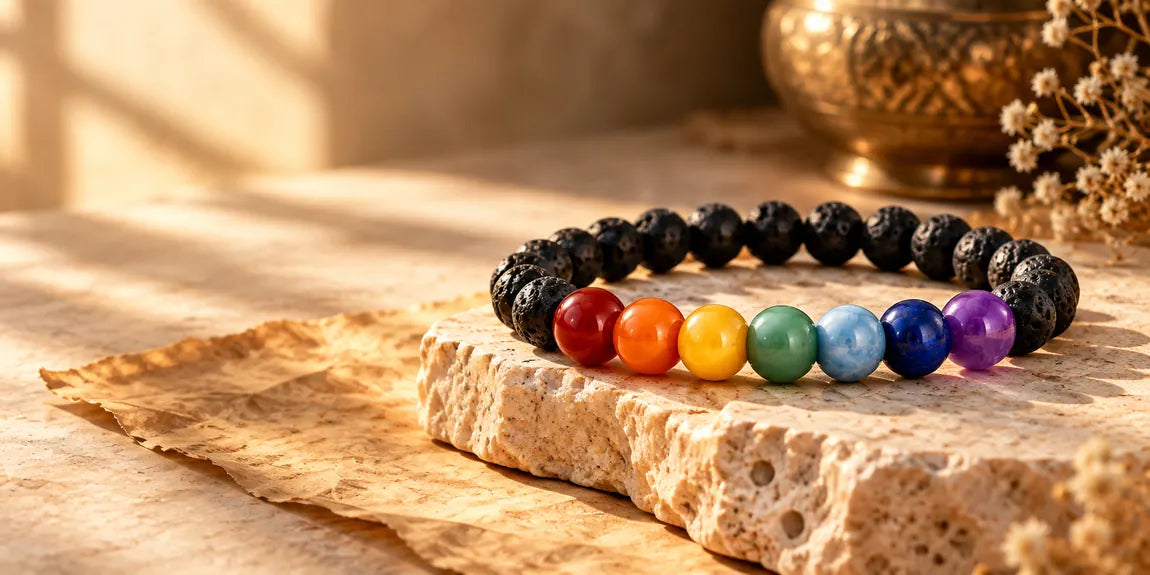
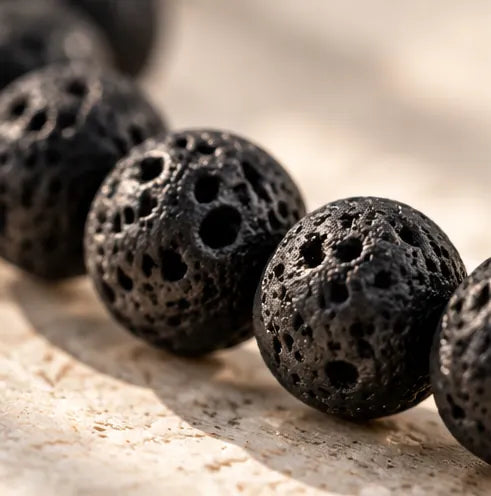
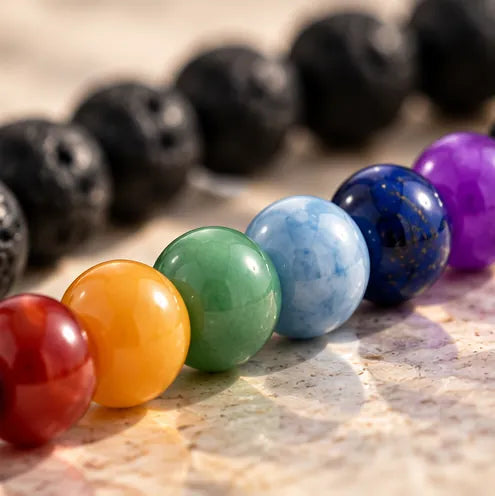
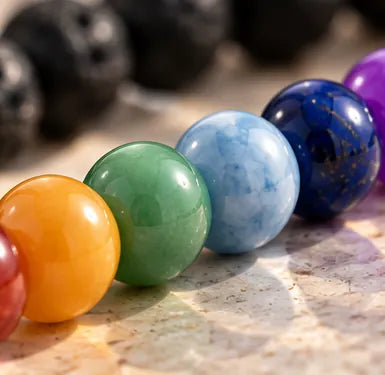
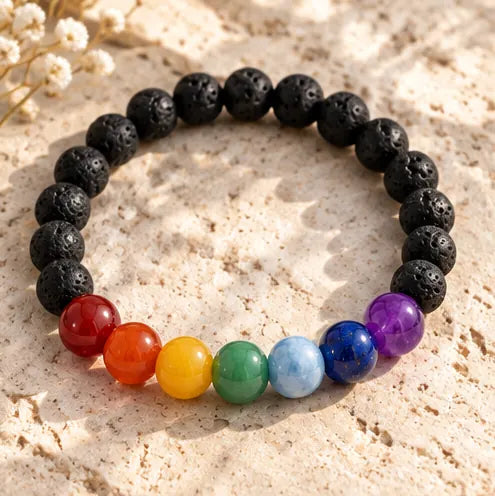
Look at the bracelet from a distance and your eye goes straight to the colour. Move closer and you notice the interruption: a sweep of matte, dark lava beads surrounding seven bright ones. The effect is almost architectural. Colour has somewhere to shine because darkness gives it an edge.
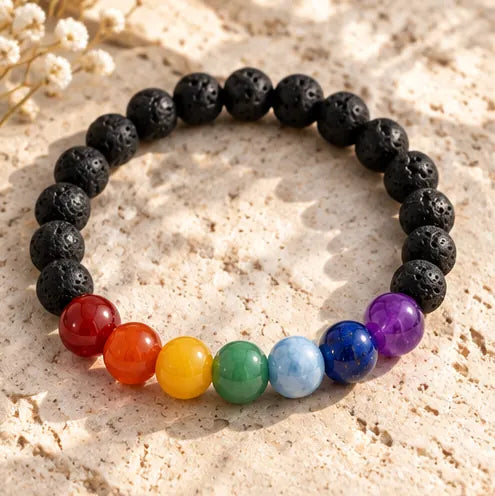
This is the INDIELIXIRS® Seven Chakra & Lava Bracelet. It can be worn for its contrast alone: seven colour beads set against porous black stone. It can also become an everyday reminder to check in with yourself. Between those two experiences lies a much larger story about the way people have imagined the inner life, the way an old idea has travelled, and the way a contemporary object can carry a personal intention without pretending to be a cure.
Our starting point: This bracelet uses seven coloured beads in a red-to-violet sequence, alongside black lava beads. The colours refer to a widely used contemporary chakra visual language. The meanings we suggest for wearing it are invitations to reflect, not statements that a stone changes an organ, energy centre, or medical condition.
First, what does “chakra” mean?
The Sanskrit word cakra is commonly translated as “wheel.” In Indian yogic and tantric traditions, chakra models describe features of a subtle body used in contemplative or ritual practice. A subtle body is not an anatomical diagram that a clinician could locate on an X-ray. Nor is there one timeless, universally agreed drawing of seven coloured circles: texts and lineages have differed in their numbers, placement, symbols, and practices. [1]
For someone raised around Indian religious language, the word may carry meanings beyond a decorative rainbow. For another wearer, it may simply be a familiar way of talking about attention, balance, or the many parts of an ordinary life. Both deserve a more careful explanation than “put this on and your chakras will open.” A bracelet can refer to a tradition; it cannot replace a teacher, a religious practice, or medical care.
Modern chakra illustrations often arrange seven colours from red through violet. That particular rainbow-and-quality chart has a history of its own. Kurt Leland’s research on the Western chakra system traces how older Indian concepts were interpreted and recombined by twentieth-century writers, colour healers, and wellness teachers. The familiar colour sequence should therefore be described as a modern presentation inspired by older traditions, rather than an unchanged diagram handed down from antiquity. [1]
This makes the bracelet no less meaningful. Symbols can acquire new artistic lives. What matters is that we give the tradition its context and give the wearer the freedom to make a considered choice.
Why lava changes the whole design
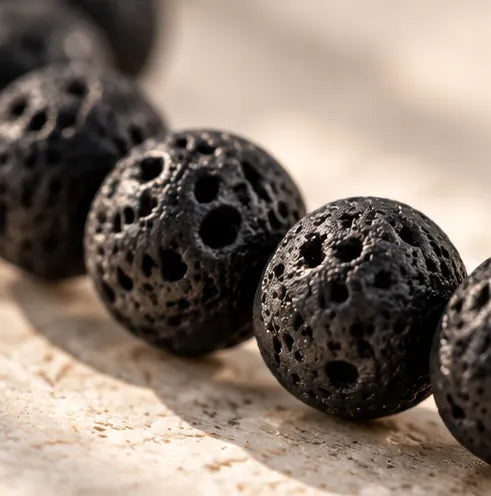
Imagine seven polished beads on their own: beautiful, perhaps, but almost too eager to speak. Now set them against a run of black, textured lava beads. The colour becomes a short sentence rather than a constant shout.
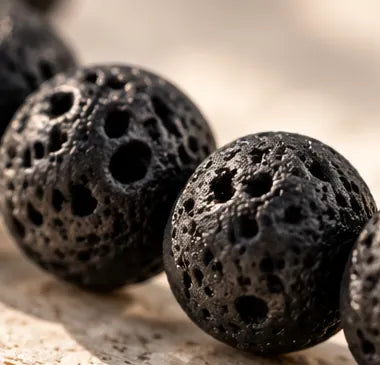
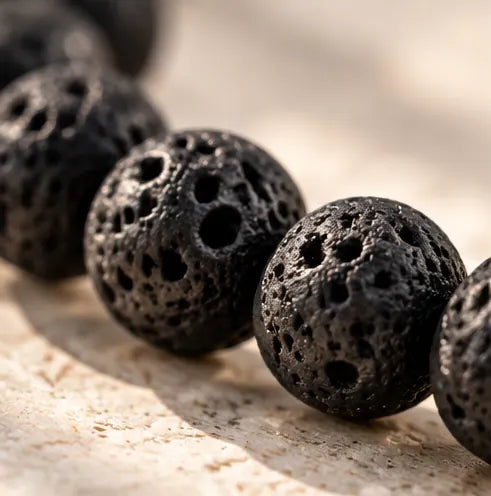
The stone’s texture has a geological story. Volcanic rock forms when molten rock reaches the surface and cools. In some volcanic rocks, bubbles of gas leave small cavities called vesicles. The U.S. Geological Survey describes these little holes as clues to how lava cooled. On a dark bead, the uneven surface catches less light than a polished coloured one; your fingers notice the change before your eyes do. [2][3]
That contrast gives us the bracelet’s design language: vivid colour and dark texture, expression and restraint. We use “grounding” as a personal metaphor for coming back to what is beneath your feet. The volcanic origin of a bead does not mean it can electrically ground a body or alter a person’s energy. Its surface can, however, be something tangible to notice when you choose to pause.
There is another visual pleasure here. A black bead does not compete with the red one beside it. It frames it. The bracelet does not need gold spacers or extra ornaments to feel finished. Its form makes room for the colour, then lets it rest.
Seven colours, seven questions
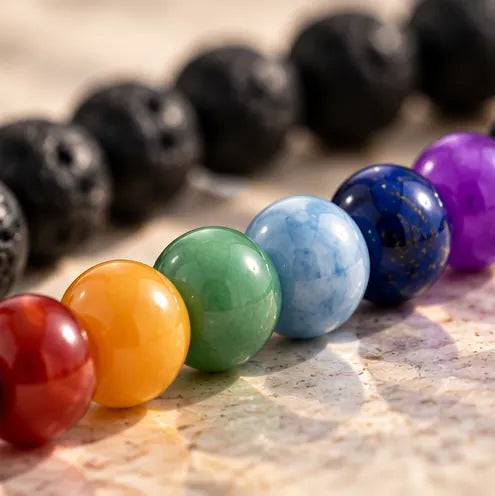
Rather than assign a guaranteed outcome to each bead, try reading the sequence as seven questions. The names below refer to the familiar modern seven-chakra sequence. The short prompts are our editorial exercise for the person wearing this bracelet; they are not translations of scripture or diagnoses of “blocked” centres. [1]
Red · Muladhara · Begin where you are
What is steady beneath the day’s demands? Perhaps a home, a routine, a person who listens, or simply the floor supporting you right now. The red bead offers a first question: What do I need to feel present before I rush ahead? Notice the distinction between asking this and promising that red stone will create safety. The first is an invitation; the second would claim too much.
Orange · Svadhishthana · Leave room for delight
A life made only of obligations loses some of its colour. The orange bead can call to mind creative play, pleasure in a meal, or the permission to try something without knowing whether it will be “productive.” Ask: What have I stopped enjoying because I have been too busy measuring it?
Yellow · Manipura · Act with intention
There are days when action is easy and days when the smallest decision feels heavy. Yellow is the brightest note in this little run of beads. Let it be a prompt to name one act you can actually complete today. Not a prediction of success. Not a promise of power. Just a next step you can own.
Green · Anahata · Make space for another person
Green sits near the visual centre of the rainbow. In a pause between tasks, you might ask whether someone needs a kinder word, a clearer boundary, or your full attention for five minutes. Care sometimes means reaching out; sometimes it means admitting you need help yourself. A bracelet cannot do either on your behalf.
Blue · Vishuddha · Say what you mean
Think of a sentence you have been rehearsing. What would make it both truthful and considerate? The blue bead can become a cue to speak with clarity, or to listen before replying. It is not a remedy for a throat problem; it is a way to bring your attention to communication.
Indigo · Ajna · Look again
An assumption can feel certain because you have repeated it often. Indigo invites a second look: What am I missing? A pause before judging a person or a situation is a small act of perspective. It will not guarantee the right answer, but it may create space for a better question.
Violet · Sahasrara · Widen the frame
At the end of the coloured sequence, look beyond the task in front of you. What are you working toward? What would you like this season of life to stand for? There is no need for a grand revelation. Sometimes perspective is as simple as remembering why an ordinary effort matters to you.
Read the sequence in the other direction on another day. Skip a colour. Ignore all of these prompts and enjoy the arrangement as jewellery. The bracelet does not come with a test you can fail.
“A symbol can travel. The story of how it travelled still matters.”
A modern ritual with respect for its roots
Yoga has many forms and histories; it is not reducible to a seven-colour chart. The U.S. National Center for Complementary and Integrative Health describes yoga as a range of practices that may include physical poses, breath, and meditation, and notes that research findings vary with the style and study. Evidence concerning yoga practice should not be transferred to a piece of jewellery. [4]
The bracelet is best understood as an object you can attach to a practice you choose. Some wearers may already have a religious or contemplative tradition, in which case that tradition belongs to them and deserves its own depth. Others may want a secular moment of attention before work. A third person may love the colours against a white linen shirt. We do not need to insist that all three people experience the piece in the same way.
Try a brief, ordinary ritual if it appeals to you. Touch one textured lava bead. Notice one coloured bead. Take an easy breath. Ask yourself, “What deserves my attention now?” Then act on the answer if you can. That movement from noticing to choosing is yours; the bracelet is a cue, not the actor.
The SANCTUM pairing, used with care
MEET SANCTUM
An aromatic roll-on oil. A bracelet to wear separately. One moment you make your own.
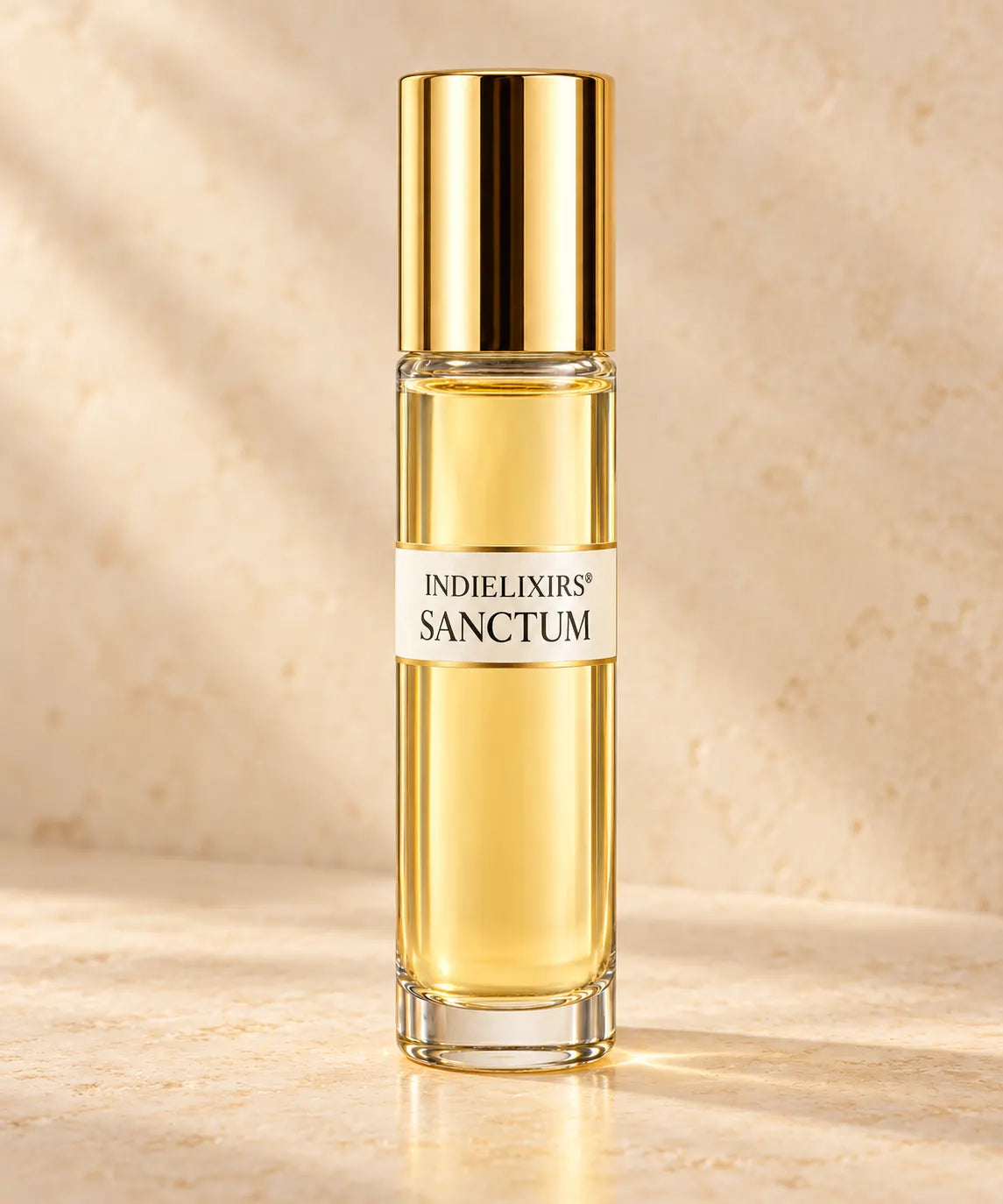
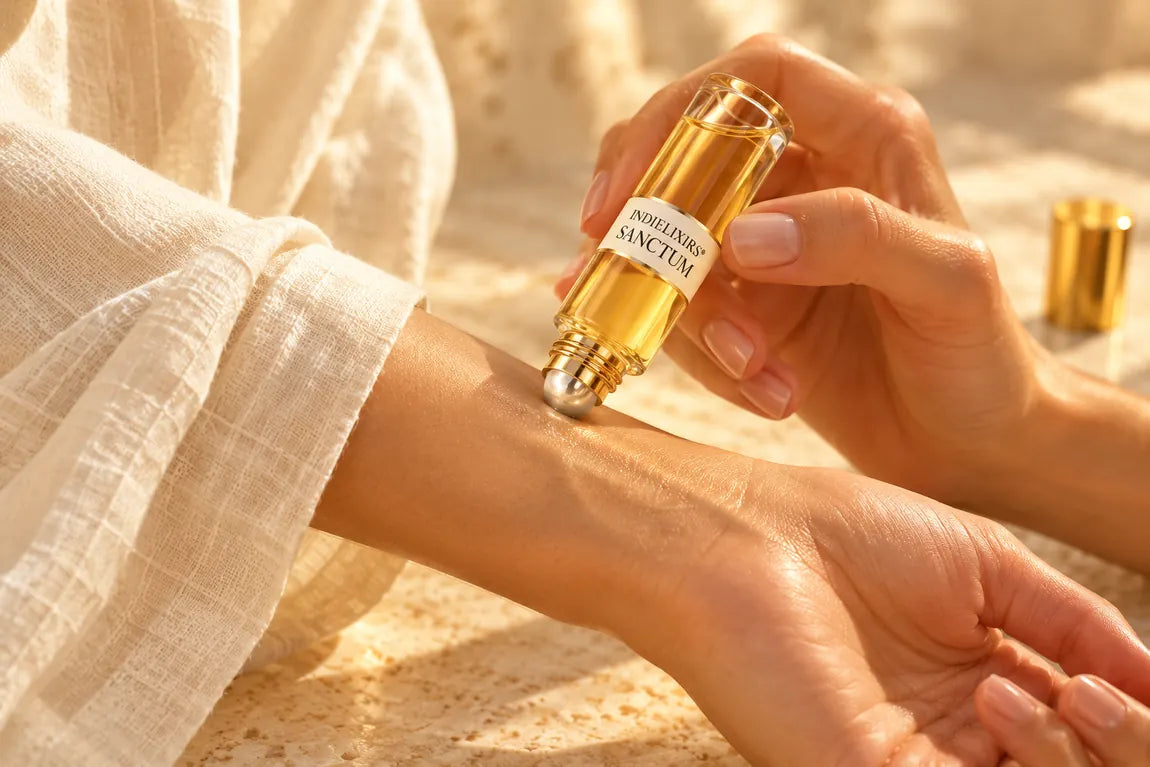
SANCTUM is the INDIELIXIRS® aromatic roll-on oil: a small bottle you can carry and use as part of a personal pause. It is a separate product from the Seven Chakra & Lava Bracelet. The bottle, the roll-on action, and the bracelet are shown together here so you can see exactly how the pairing works.
If you enjoy an aromatic ritual, roll SANCTUM onto a pulse point on your skin, following its own label and skin-safety directions. Pause to notice the aroma. Then wear the bracelet as a separate reminder of that moment, or simply return to your day.
Do not apply SANCTUM directly to the lava beads, coloured beads, or elastic. Oils can leave residue and may affect a strung bracelet over time. The bracelet and the oil can share a ritual without needing to touch one another. A scent can become personally associated with a pause through repeated use; neither product promises to balance a chakra or treat a health concern.
There is a reason this pairing feels considered. Texture, colour, and aroma invite three different kinds of noticing. It is the person who links them by choosing a small moment. The ritual remains simple enough to belong to everyday life.
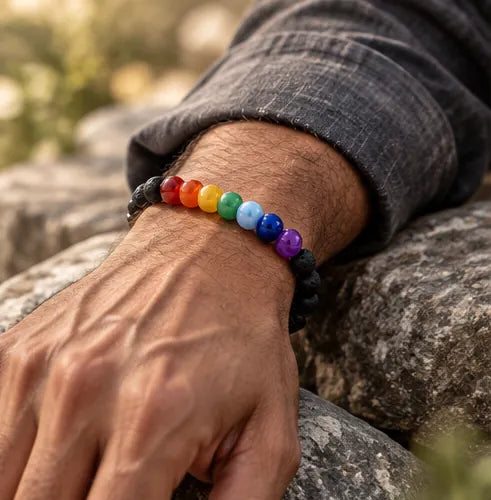
Worn beyond the meditation corner
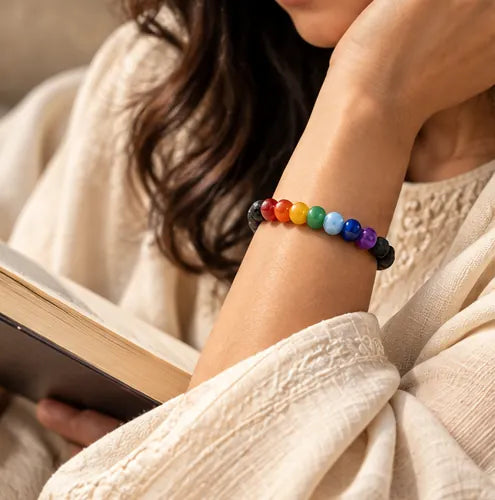
A bracelet that only belongs to a ritual would miss much of its life. Against an ivory sleeve, the coloured stones look crisp and the lava looks sculptural. With a charcoal jacket, most of the piece becomes quiet and the rainbow becomes a small flash. It can sit next to a watch, travel with a rolled-up linen shirt, or appear unexpectedly at the edge of a photograph.
It is equally at home as a gift. A daughter beginning a new course, a son setting up his first home, a partner whose days are crowded, or a parent who has spent years looking after everyone else might each receive it with a different message. “I thought you would like the colours.” “I wanted to give you a small reminder to make room for yourself.” “This felt like you.” None of these requires the recipient to adopt a belief or promise a change.
Its look can be bold without being loud because the lava beads hold the colour in proportion. On different wrists it may feel playful, grounded, ceremonial, or simply handsome. Those impressions are not contradictions. They are what happens when a design gives its wearer some room.
Care, and the freedom to make it yours
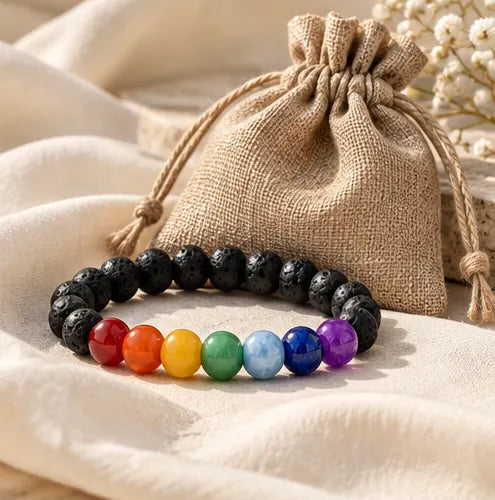
A little ordinary care keeps the finish and stringing looking better. Roll the bracelet on and off instead of pulling the elastic wide. Wipe the beads gently with a soft, dry cloth after wear. Keep it away from perfume, oils, harsh cleaners, prolonged water exposure, and rough surfaces; store it in its pouch when you are not wearing it. These are practical care suggestions for a beaded, strung object, not a cleansing ritual.
There is no required day to begin wearing it, no compulsory wrist, and no ceremony that makes it “work.” If you want to give the bracelet a personal meaning, choose a sentence in your own words. “Let me notice before I react.” “Let me make time for what matters.” Or simply, “I like this.”

The colour is only the beginning
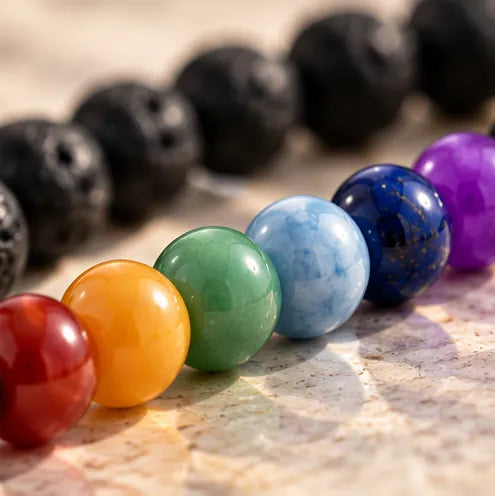
The seven beads make you look. The lava beads make you look again. Together, they turn a vivid accessory into a small study in contrast: movement and stillness, brightness and shadow, expression and breathing room.
The old word cakra has travelled through complex traditions into contemporary life. This bracelet is one modern object in that long journey. Its value need not depend on a claim that it can repair an invisible system. It can be carefully made, lovely to wear, meaningful to give, and useful as a reminder because you decide to notice it.
The colours begin the conversation. What you do with the moment belongs to you.
THE OBJECT BEHIND THE STORY
Seven Chakra & Lava Bracelet
Seven colours. One everyday ritual. A piece to wear for its beauty and the meaning you choose.
Explore the bracelet ↗Sources and further reading
[1] Kurt Leland, “The Rainbow Body: How the Western Chakra System Came to Be,” Theosophical Society in America. History of the modern colour chart and its relationship to earlier traditions. The article is the researcher’s own account; other traditions have their own interpretations.
[2] U.S. Geological Survey, “What are igneous rocks?”. Formation of volcanic rock at or near the surface.
[3] U.S. Geological Survey, “Find-A-Feature: Vesicles”. Gas cavities in volcanic rock.
[4] U.S. National Center for Complementary and Integrative Health, “Yoga: Effectiveness and Safety”. Variety of yoga practices and the context of research into yoga.
Editorial note
This article brings together accounts of religious and contemplative traditions, historical research on modern chakra imagery, geological information, and public-health research on yoga. The links above identify the external sources. Those accounts and interpretations are presented for general cultural and educational interest. Their authors and institutions do not endorse INDIELIXIRS® or this bracelet; their views are not personal advice, guarantees, or statements made by INDIELIXIRS®, its affiliates, or employees. The seven reflection questions, styling descriptions, and suggested everyday ritual are INDIELIXIRS® editorial ideas. The coloured beads are described by colour here because this article does not certify the mineral identity of each bead. The bracelet and SANCTUM do not diagnose, treat, or promise to balance a medical or spiritual condition.