Cart
0
For devotion
A familiar offering for aarti and puja, following your household or temple tradition.


The familiar fragrance. The brass plate. The moment everyone becomes quiet.
Some traditions live within us long before we find the words for them. Bring that feeling into your home, one thoughtful offering at a time.
BRING THE RITUAL HOME →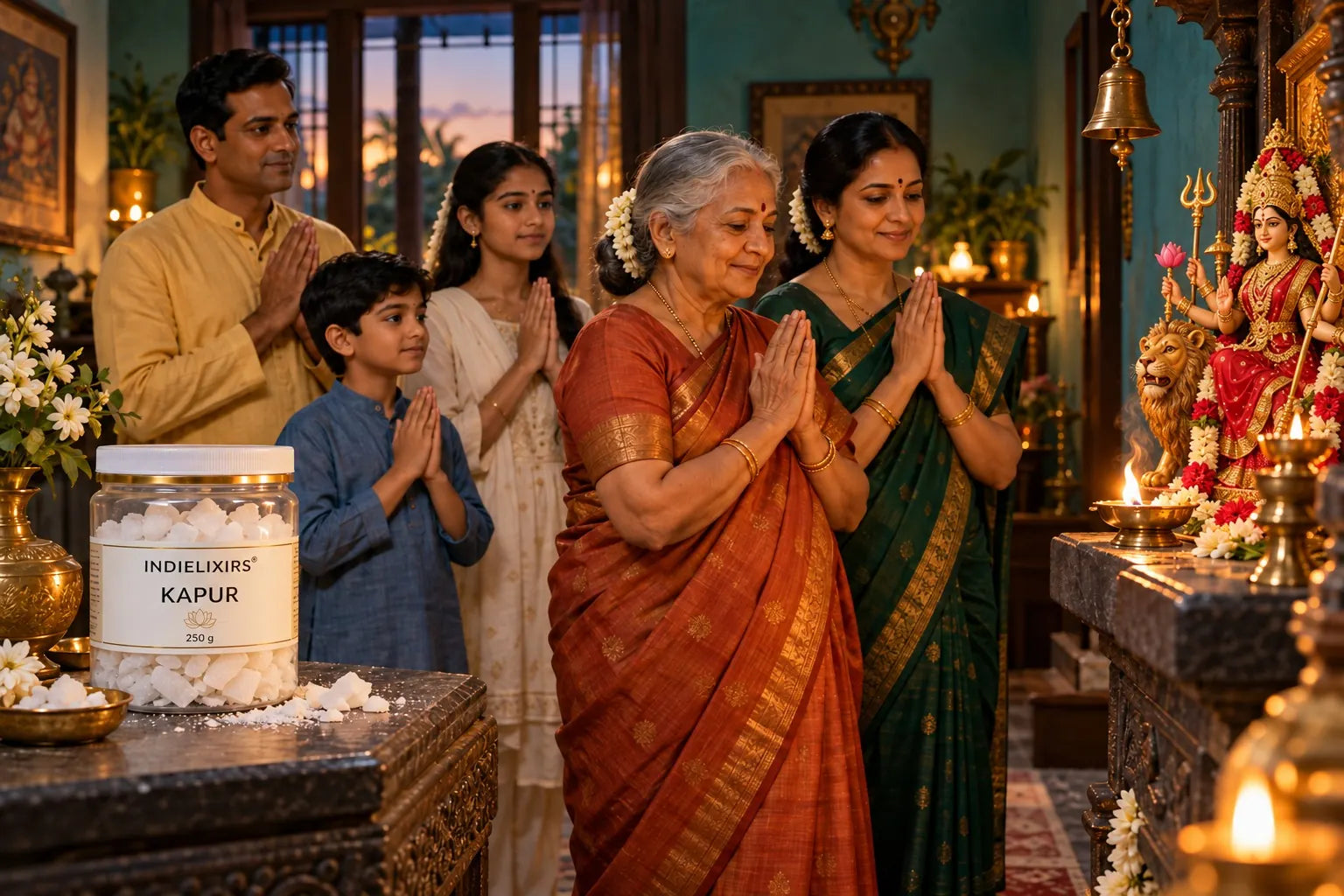
Perhaps you remember your grandmother reaching for the aarti plate. A bell before the evening meal. A temple visit where the world outside seemed to fall quiet. Kapur carries the invitation to return to those moments—and create a place for them in the life you live now.

From Kashmir to Kanyakumari, Bengal to Saurashtra, India’s forms of worship speak many languages. Within many Hindu traditions, Kapur has a familiar place in the offering of light.
The Ganga ghats and sacred Triveni sangams belong to this wider inheritance of prayer, gratitude and renewal. Your own offering may be much smaller. The feeling can still be deeply personal.
The Ganga ghats · An inheritance of light, devotion and renewal.
There is something moving about watching a small piece of Kapur give itself to the flame. In devotional interpretation, that act becomes an image of surrender: less pride to defend, less resentment to carry, more room for gratitude.
You might offer a prayer. Remember someone you love. Set an intention to speak more gently. Let the ritual mark a moment when you choose how you want to return to the people and the place that matter.
“May I bring a little more light into the way I live.”
In the language of ritual, purification is an act of preparing for something sacred. Clear the surface. Open the room to fresh air. Place the aarti vessel carefully. Give your attention to what you are about to offer.
After a hurried morning, before an evening prayer or at the beginning of a family occasion, this simple sequence can become your gesture of renewal. Let it hold the intention to leave yesterday’s arguments behind and welcome the next moment with care.
A familiar offering for aarti and puja, following your household or temple tradition.
A symbolic way to mark a fresh beginning and give your attention a place to rest.
A ritual you can inherit, return to and share with those who make a place feel like home.
India’s ritual heritage is held in homes as much as in great temples.
Kapur is recognised in many Hindu communities through its fragrance and bright flame. The names, prayers, vessels and gestures vary. One family closes its puja with a camphor offering; another follows a different form of aarti. It is this diversity that makes the inheritance feel alive.
At Varanasi’s Dashashwamedh Ghat, the Ganga Aarti brings together light, bells and collective devotion. At Prayagraj’s Triveni Sangam, and at the sacred confluence near Somnath in Saurashtra, water and worship meet in landscapes cherished by generations. These places evoke a wider world of sacred offerings, where generations have come to express gratitude and seek renewal.
Think of the prayer corner you grew up with. Perhaps its shelf was small and its brass plate worn smooth. What made it unforgettable was the care with which someone prepared it. That is an inheritance you can carry forward, wherever home is now.
Kapur belongs within many traditions of worship across India. Each region, family and occasion brings its own expression of devotion.
An offering of light can express what a long prayer sometimes cannot.
In Hindu puja practice, nīrājana is the ceremonial offering of light. Published puja procedures for deities including Lakshmi, Ganesha and Shiva include camphor aarti. The phrase karpūra-nīrājana names that offering directly.
The familiar devotional words “कर्पूरगौरं करुणावतारं”—Karpūra-gauraṃ karuṇāvatāraṃ—describe Shiva as white like camphor and an embodiment of compassion. The image connects camphor’s whiteness with a devotional vision of purity.
When you offer light, let it be an act of presence. You are taking something ordinary—a small vessel, a familiar substance, a few moments of your time—and treating it with reverence. The details of a formal puja can be learned within your own tradition. The care with which you approach it is yours to bring.
An offering of light. A gesture of reverence. A tradition you can approach with care.
Let purification become a meaningful gesture of release.
In devotional tradition, the camphor offering is associated with spiritual purification. Watching the piece diminish in the flame offers an image for letting go: the need to win an argument, the harsh word you keep replaying, the pride that keeps an apology waiting.
You do not need to arrive at the ritual already peaceful. Come with the day you have had. Offer a simple intention: “May I respond with patience. May I hold this home with care.” Allow the moment to remind you of the person you want to be when you leave the prayer space.
Then carry that intention into something small and real. Put a thing back in its place. Check on someone. Begin the conversation more gently. Give the symbolism a place in everyday life.
A traditional purification ritual, held with the intention of clarity, gratitude and a fresh beginning.
For those who follow Jyotisha, a ritual can give their intention a devotional form.
In astrological tradition, Shukra is associated with beauty, affection, refinement and material comforts. Some Shukra remedy traditions include camphor among offerings or donations. Some practitioners describe these devotional practices as supporting or “strengthening Shukra.”
If this association speaks to you, let your intention centre on qualities you would like to nurture: appreciation in a relationship, care in your surroundings, generosity and the ability to notice beauty in an ordinary day.
You may include Kapur in an established puja recommended within your tradition. Let a Friday moment of prayer become a personal reminder to treat yourself and others with greater care.
Traditional Shukra intentions: beauty in your surroundings, warmth in your relationships, grace in the way you live.
A home is also shaped by the attention we bring to it.
In contemporary Vastu-related household customs, Kapur is used with the intention of clearing negativity, welcoming auspiciousness and supporting harmony. Its flame and fragrance become symbolic expressions of a fresh beginning.
Let that intention begin with practical care. Clear the prayer surface. Remove clutter from a shared corner. Welcome daylight and fresh air when conditions allow. If you choose to offer Kapur, use a suitable vessel in one stable, well-ventilated place.
You can make the moment personal: before a family gathering, after tidying the house or when beginning a new chapter in your home. Choose a prayer for the quality of life you hope to create there—kindness, steadiness, welcome.
Traditional Vastu intentions: a welcoming atmosphere, a sense of renewal and harmony within the home.
Keep the ritual close to the moments that matter.
A brief offering after preparing your prayer space. Let your intention be simple: to meet the day with patience and attention.
Set aside the rush for a few moments. If aarti is part of your tradition, let the familiar flame mark your return to home and to the people within it.
Bring Kapur into your established puja, following the guidance of your family or priest. Let the occasion carry gratitude for what has been and hope for what comes next.
Think of the person who first showed you this ritual. Recall the care in their hands and the sound of their voice. Make room for that memory, then add a little of your own meaning.
Choose a stable, heat-resistant surface in a well-ventilated space. Keep loose fabrics, flowers and the product jar away from the flame area.
Use only the amount specified on the final product label, in a fireproof vessel intended for camphor. Never light Kapur inside its PET jar.
Light carefully and remain present. Follow your own aarti tradition, or keep the vessel stationary while you offer a quiet prayer.
Ensure the flame is out and allow the vessel to cool before touching it. Carry your intention into one thoughtful action.
Fire safety: Never leave burning Kapur unattended. Keep children and pets away. Do not burn on the skin, carry a burning vessel through rooms or inhale fumes closely. Stop use if it causes irritation.
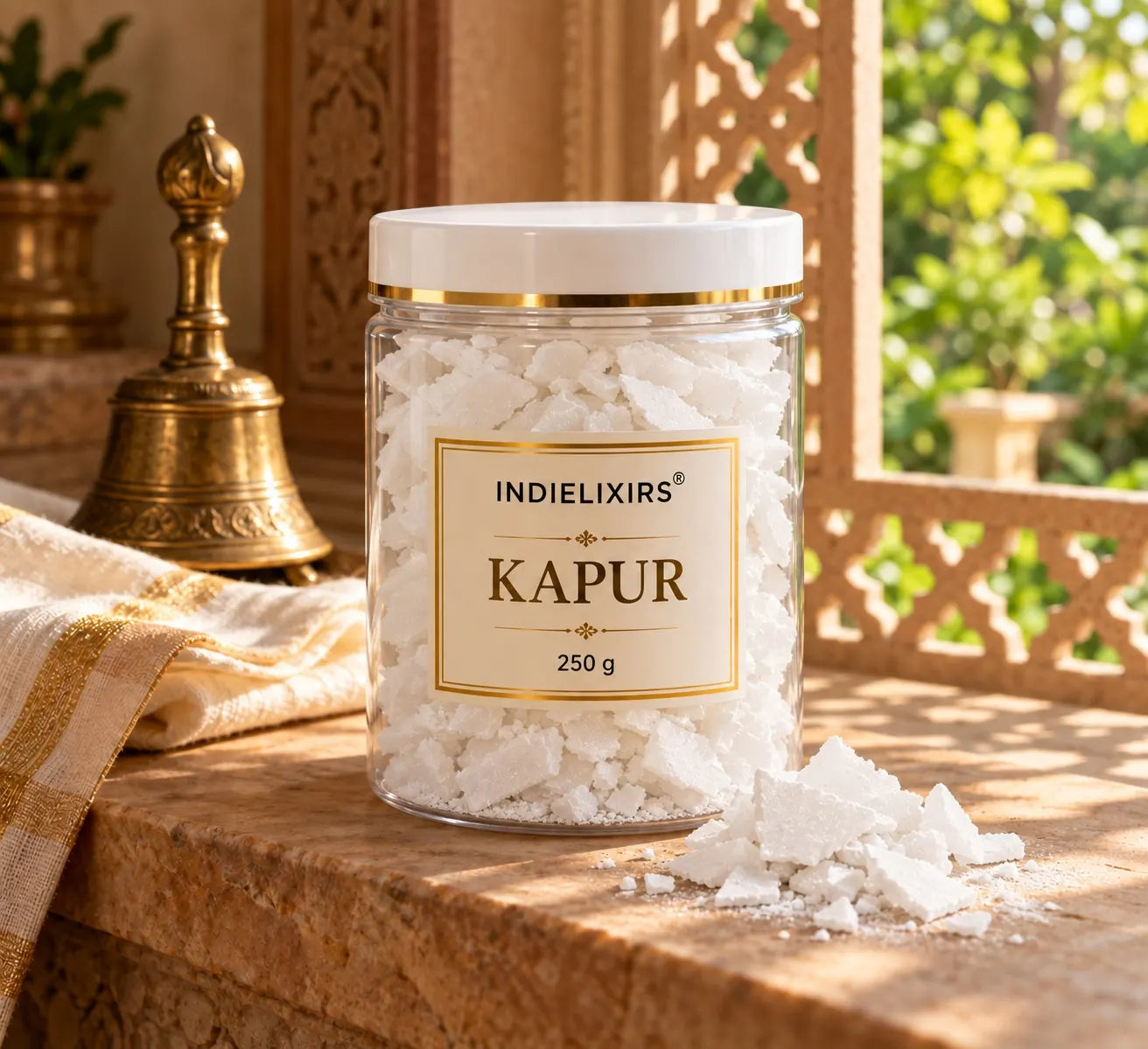
Aarti at home. A festival with family. A prayer before a new beginning. Keep Kapur close to the traditions you choose to carry forward.
Coming Soon
The flame is brief.
The meaning is yours to keep.
The fragrance you remember. The pause you have missed. The care you want to bring into your space.
MAKE ROOM FOR YOUR RITUAL →Visuals are for reference only. The actual product may differ.
For ritual use only. Do not ingest, add to food, apply to skin or use in steam inhalation. Keep tightly closed, dry and away from heat, sunlight and ignition sources. Store securely out of reach of children and pets. Camphor can be toxic if swallowed; seek urgent medical advice after accidental ingestion. Never use the plastic jar as a burner.
Follow the final label for the quantity, suitable burner and handling instructions. Product composition, grade, sourcing, burning directions and final price require owner confirmation before this page is used for sale. No claim of natural origin, edible grade, purity percentage or residue-free burning is made.
The heritage, purification, Jyotisha and Vastu passages describe cultural practices, devotional interpretations and traditional beliefs. The Friday intention is an editorial suggestion. The Shukra and Vastu associations are not attributed here to a verified verse from a classical shastra. The Shiva verse is devotional imagery, not a remedy prescription. They do not establish scientific effects. Kapur does not guarantee stronger Shukra, removal of negative energies, Vastu correction, protection, prosperity, relationship harmony or health outcomes.
Burning camphor is not a substitute for ventilation, cleaning, medical care, qualified advice or practical changes to a building. Ritual customs and the fuels used in aarti vary across communities, temples and river ceremonies. References to sacred places describe the wider heritage of worship, not a universal camphor practice.
Heritage context is grounded in the references below. Astrological and Vastu sources document beliefs; they are not scientific validation or confirmation of classical textual provenance.
We don’t prescribe the ritual.
We create the possibility for one.